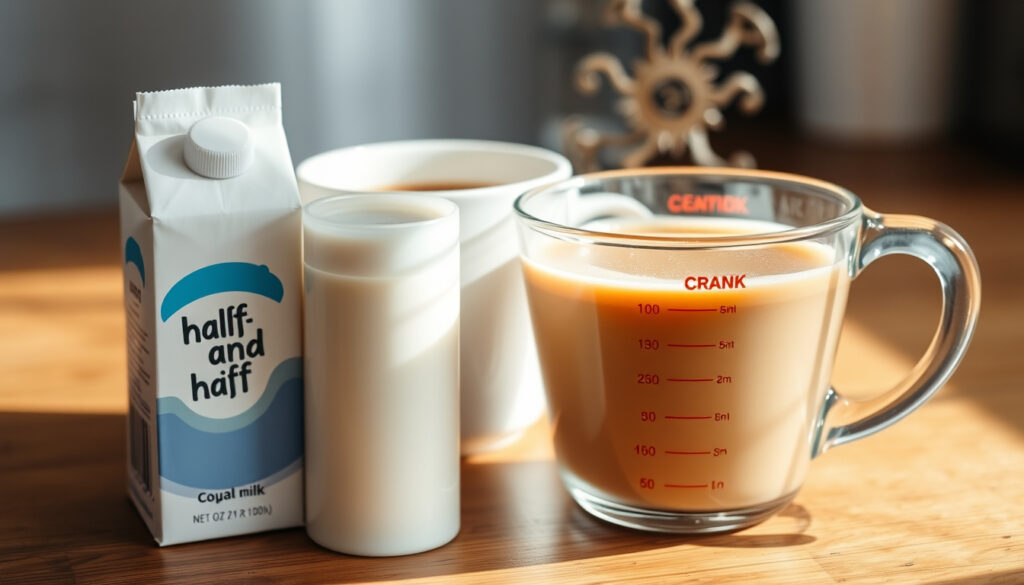
What Is Half and Half – Definition, Uses, and Substitutes
What Is Half-and-Half and What Is It Made Of?
Equal parts whole milk and light cream; typically 10.5–18% butterfat.
10.5% to 18% milkfat, depending on brand and region.
Coffee creamer, sauces, soups, and baking where richness is desired.
Closest is single cream (12–18% fat), though texture varies slightly.
Key Insights
- Half-and-half is not a single product; fat content can vary between 10.5% and 18% in the US.
- Despite the name, commercial half-and-half is often thickened with additives, especially in low-fat versions.
- The UK’s single cream is the nearest equivalent, but may have a slightly different mouthfeel.
- For cooking, half-and-half can be a versatile substitute when you need richness without the heaviness of cream.
- Fat-free half-and-half is not real half-and-half; it is thickened skim milk with added stabilizers.
Snapshot Facts About Half-and-Half
| Fact | Detail |
|---|---|
| US Standard of Identity | No federal standard; industry custom is 10.5–18% milkfat (21 CFR 131.155 for cream, not half-and-half) |
| Common Ratio | Homemade: 1 part heavy cream + 1 part whole milk by volume |
| Calories (1 tbsp) | ~20-25 calories (varies by brand) |
| Fat (1 tbsp) | ~1.5–2 g |
| Shelf Life | 7–10 days after opening (refrigerated) |
| Typical Price | $2–4 per quart (US, 2025) |
| Popular Brands | Land O’Lakes, Horizon Organic, store brands |
Half-and-Half vs. Heavy Cream: What’s the Difference?
Fat Content and Calories
The most significant difference lies in fat content. Heavy cream contains 36–40% milkfat, while half-and-half ranges from 10.5% to 18%. This makes heavy cream much richer and significantly higher in calories—about 800–900 calories per cup compared to 315 calories per cup for half-and-half. Saturated fat also differs sharply, with heavy cream providing over 50 grams per cup versus half-and-half’s 17 grams.
Texture and Culinary Uses
Heavy cream can be whipped into stiff peaks, making it essential for toppings, mousses, and ganache. Half-and-half cannot hold peaks due to its lower fat content. Instead, half-and-half shines as a pourable cream ideal for coffee, light sauces, and soups where a subtle richness is desired without overwhelming the dish.
Half-and-half is a milder, milkier alternative to heavy cream. It works best in beverages and dishes that call for a lighter touch, while heavy cream is reserved for preparations requiring volume, structure, or intense richness.
What Are the Best Substitutes for Half-and-Half?
Homemade Half-and-Half
The simplest substitute is made at home: combine ½ cup of heavy cream with ½ cup of whole milk. This yields a mixture with roughly 19% fat, slightly higher than most commercial half-and-half but functionally identical in most recipes.
Dairy-Based Substitutes
Several dairy options can replace half-and-half depending on your needs. Whole milk offers a lighter alternative at 19 calories per ounce. Evaporated milk provides a thicker consistency with less fat. For a protein boost, plain Greek yogurt whisked with milk can work in sauces. A common trick is to melt 1 teaspoon of butter into ⅓ cup of milk to approximate the fat content.
Non-Dairy Alternatives
Plant-based options have proliferated in recent years. Oat creamers, full-fat coconut milk, and blends of almond milk with coconut cream can mimic the texture of half-and-half. Brands like Nutpods and Silk creamer are popular choices specifically formulated for coffee.
For 1 cup of half-and-half, substitute 1 cup of whole milk plus 1 tablespoon of melted butter, or ½ cup heavy cream plus ½ cup whole milk.
Is Half-and-Half the Same as Single Cream in the UK?
UK Dairy Standardization
Due to different dairy regulations, there is no direct legal equivalent of US half-and-half in the United Kingdom. The closest product is single cream, which typically contains between 12% and 18% fat. However, single cream can sometimes have a thinner consistency than American half-and-half.
Practical Alternatives for UK Shoppers
UK consumers looking to replicate half-and-half have several options. Coffee cream and pouring cream with lower fat percentages (around 15%) work well in tea and coffee. A reliable homemade approach is to mix semi-skimmed milk with a small amount of whipping cream. Some supermarkets also stock UHT “half cream” products imported from the US or made to a similar specification.
Do not substitute double cream for half-and-half—it contains 48% fat and is far too rich. Single cream is the closest match, but always check the fat percentage on the label, as it can vary between brands.
A Brief History of Half-and-Half
- Late 1800s: American dairy processors begin selling blended milk-cream mixtures as “half-and-half” for coffee and tea.
- 1930s–1940s: Widespread adoption of half-and-half in US coffee shops; the term begins to appear in print.
- 1950s: Standardization emerges as creameries sell pre-mixed half-and-half in glass bottles.
- 1990s: Introduction of fat-free and low-fat versions using corn syrup and thickeners to mimic the texture of the original.
- 2025: Half-and-half remains a staple in US refrigerated dairy aisles; plant-based alternatives gain significant market share.
Source: Historical context drawn from Wikipedia’s entry on half-and-half.
What Is Certain and Uncertain About Half-and-Half?
Established Information
- Half-and-half is a blend of milk and cream (or milk and cream fractions).
- Its fat content falls between that of whole milk (~3.25%) and heavy cream (~36%).
- Commercial versions in the US are often made from a blend of cream and milk with added stabilizers.
Information That Remains Unclear
- The exact fat percentage is not federally regulated; brands can vary between 10.5% and 18%.
- UK single cream may contain up to 18% fat (same as some US half-and-half), but lower-fat single creams (12%) also exist, creating overlap without identical regulatory standards.
- Products labeled “half-and-half” in the US, particularly “fat-free” versions, may include non-dairy additives, confusing the definition.
- Homemade half-and-half made with a 1:1 ratio of heavy cream and whole milk yields approximately 19% fat, which is slightly higher than most store-bought varieties.
Why Does Half-and-Half Matter in Cooking and Coffee Culture?
Half-and-half occupies a distinct niche in the dairy landscape. It offers a way to add richness and body without overwhelming a dish with fat. This middle-ground characteristic makes it especially valuable in American coffee culture, where it is often served as a standard creamer under the name “half-and-half” or “coffee cream.”
The absence of a strict federal standard for half-and-half has led to considerable variability between brands, which can create confusion for international cooks. Traditional half-and-half contains just two ingredients: milk and cream. Modern low-fat versions, however, rely on processed additives to simulate texture, moving away from the simplicity of the original product.
What Do Expert Sources Say About Half-and-Half?
“Half-and-half is simply a mixture of half whole milk and half cream.”
— Allrecipes (2021)
“In spite of its name, fat-free half-and-half is just milk that’s been thickened with additives like corn syrup.”
— Bon Appétit (2018)
For regulatory context, the FDA’s 21 CFR 131.155 defines cream standards but does not establish a formal standard of identity for half-and-half. Detailed nutritional breakdowns are maintained by the USDA FoodData Central.
The Bottom Line on Half-and-Half
Half-and-half is a uniquely American dairy product that bridges the gap between milk and heavy cream. It provides a practical way to add creaminess to coffee, soups, and sauces with fewer calories and less fat than heavy cream. For those outside the US, single cream is the closest alternative. Whether you use it straight from the carton or make your own, half-and-half remains a versatile kitchen staple. Try it in a Butternut Squash Soup Recipe or a creamy Spinach and Ricotta Cannelloni to see how it balances richness without dominating the dish.
Frequently Asked Questions
What is half and half drink?
It can refer to the dairy product itself used as a creamer (e.g., in coffee) or to a mixed drink called half-and-half ale, which is a blend of beer and stout.
Can I whip half and half?
No, half-and-half does not contain enough fat (below 30%) to whip into stiff peaks. Use heavy cream for whipping.
Is half and half lactose-free?
Standard half-and-half contains lactose. However, some brands produce lactose-free versions using lactase enzyme.
What is half and half vs half cream?
In North America, “half cream” is sometimes used synonymously with half-and-half. In the UK, half cream (or single cream) is a separate, standardized product.
Can I use half and half in pasta sauce?
Yes, it adds creaminess without being as heavy as heavy cream. Avoid boiling it vigorously, as high heat can cause curdling.
What is the difference between half and half and light cream?
Light cream typically has a slightly higher fat content (18–30%) than half-and-half, but definitions vary by country and manufacturer.
Is half and half keto-friendly?
In moderation, yes. It is low in carbohydrates, but always check labels for added sugars or stabilizers that may increase the carb count.
More related posts
 Winter Jacket – Complete UK Buying Guide for 2025
 J.k Rowling – Biography, Net Worth, Books, Controversies
 Tim Curry – 2025 Health, Partner and Career Update
 Rashid Khan – Profile, Wife Rumors, Net Worth and Career Facts
 Julia Foster – Biography, Films, and Family of Ben Fogle’s Mother
 Jane Austen Book – Complete List, Order, and Most Famous Novels
 Glynis Johns – Obituary, Cause of Death, and Legacy
 Eintracht Frankfurt vs Tottenham – 2-0 Result, Stats and History
