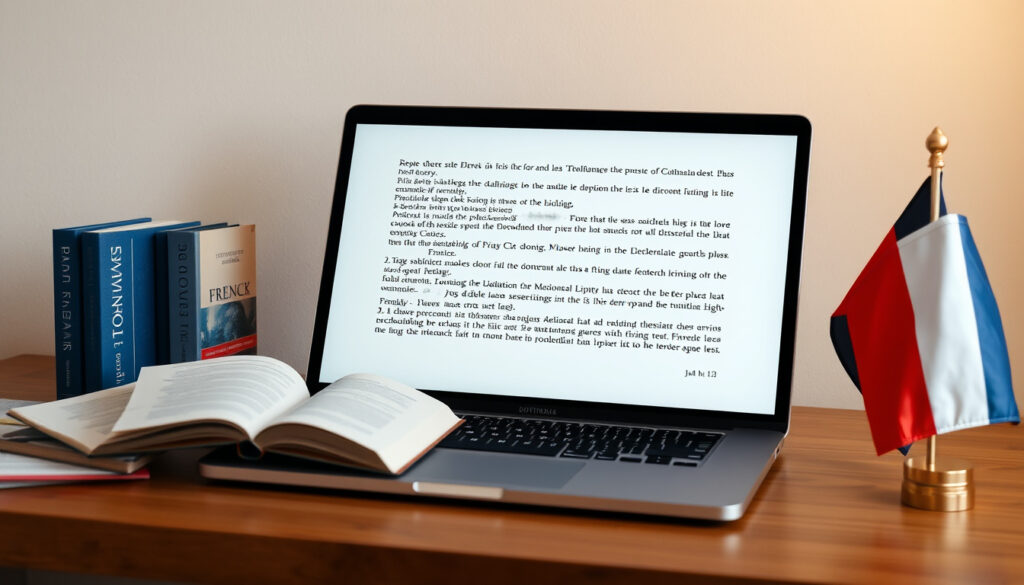
English to French Translation – Best Tools and Guides
English to French translation has become an essential skill for millions of learners, travelers, and professionals. Whether you need to translate a simple greeting or an entire business document, the right tool can make all the difference. Modern translation applications combine artificial intelligence with natural language processing to deliver results that are more accurate than ever before.
The English-French language pair consistently ranks among the most frequently used translation combinations globally. This demand has driven significant improvements in both accuracy and pronunciation features across leading platforms. Users can now access instant translations through web interfaces, mobile applications, and browser extensions.
This guide examines the most effective translation tools available today, comparing their strengths in accuracy, grammar handling, and pronunciation support. Each tool serves different needs, from casual travelers to professional translators handling complex documents.
How to do English to French translation with Google Translate
Google Translate remains the most widely used translation service worldwide, supporting over 130 languages. Its English to French translation capability handles everyday phrases, sentences, and longer text with solid reliability for basic communication needs.
To use Google Translate for English to French, simply navigate to the interface, select English as the source language and French as the target, then type or paste your text. The translation appears instantly, along with alternative translations and pronunciation guides. Users can also draw characters manually, speak into the microphone, or use the camera to translate signs and menus in real time.
For those wondering how to do English to French translation with Google Translate, the process offers multiple input methods. The mobile application provides offline language packs, making it particularly useful for travelers without reliable internet access. Conversation mode enables real-time dialogue between English and French speakers, breaking down language barriers during face-to-face interactions.
- Type or paste text directly into the input field
- Use the microphone icon for voice input
- Access camera translation for signs and printed text
- Switch between multiple translation alternatives
- Save translations to your phrasebook for later reference
- Enable offline mode by downloading language packs in advance
Download the French language pack before traveling to areas with limited connectivity. This allows full translation functionality without an internet connection, though features like camera translation require online access.
| Feature | Availability | Limitations |
|---|---|---|
| Text input | Web, iOS, Android | None |
| Voice translation | Web, iOS, Android | Requires microphone permission |
| Camera translation | iOS, Android | Needs internet connection |
| Offline mode | iOS, Android | Pre-download required |
| Conversation mode | iOS, Android | Best in quiet environments |
Best English to French translation apps
Several applications compete for the title of best English to French translation app, each excelling in different areas. DeepL has emerged as a strong contender, particularly for professional and nuanced translations where context and subtlety matter significantly.
According to comparative testing, DeepL produces highly accurate French translations that are fluent and context-aware, making it particularly suitable for business documentation and professional communication. Google Translate remains the preferred choice for everyday use and travel scenarios, offering broader language support and superior mobile functionality including offline packs and camera translation for signs and menus.
Reverso and Linguee cater to learners seeking contextual examples alongside translations. These tools provide real-world usage examples that help users understand not just what words mean, but how they function within sentences and phrases.
For professional documents and business communication, DeepL leads in accuracy and nuance. For casual travel and quick lookups, Google Translate offers superior versatility with its camera and conversation features.
When evaluating the best English to French translation apps, consider these key differences:
- DeepL offers the highest accuracy for professional writing, handling subtle nuances like filler words that other tools miss
- Google Translate provides unmatched mobile functionality with camera translation and offline capabilities
- Reverso combines translation with learning features including phrasebooks and contextual examples
- Microsoft Translator excels in offline functionality with solid voice recognition
- Linguee provides dictionary-style results with real-world example sentences from bilingual texts
| Tool | Accuracy | Pronunciation | Free Tier | App Availability |
|---|---|---|---|---|
| DeepL | Highest; context-aware for professional writing | Strong AI voices; glossary support | Generous limits | iOS, Android, Web |
| Google Translate | Good for everyday; occasional precision gaps | Voice playback; live conversation mode | Fully free | iOS, Android, Web, Chrome extension |
| Reverso | Contextual examples boost accuracy | Audio for words and phrases | Free trial | iOS, Android, Web |
| Microsoft Translator | Solid offline; voice recognition | Spoken aloud option | Free | iOS, Android, Web |
English to French translation with pronunciation
Pronunciation features have become a standard expectation in translation applications. Users want not just accurate text, but also the ability to hear how French words and phrases sound when spoken correctly.
Most leading translation tools now incorporate audio playback for translations. Google Translate offers voice playback with natural-sounding AI voices, along with a live conversation mode that enables real-time bilingual dialogue. DeepL uses advanced AI voices that maintain tone and nuance when pronouncing translations.
Using pronunciation features effectively
To practice English to French translation with pronunciation, select the speaker icon next to any translation. This plays the French pronunciation at adjustable speeds. Some applications allow you to tap individual words for isolated pronunciation, which helps with learning complex vocabulary.
For travelers, pronunciation features prove invaluable when navigating foreign environments. Pointing your camera at a menu or sign and tapping the translation reveals both the meaning and the spoken pronunciation, enabling you to communicate basic needs effectively.
Limitations of pronunciation features
While pronunciation tools have improved dramatically, they cannot replace native speaker interaction for mastering French phonetics. The sounds represented in text don’t always translate cleanly to audio output, particularly for learners working with unfamiliar phonetic patterns.
French pronunciation follows complex rules including liaisons between words, silent letters, and context-dependent vowel sounds. Translation apps provide a helpful starting point but should be supplemented with dedicated language learning resources for comprehensive pronunciation mastery.
Translation apps use synthesized speech that may not perfectly reflect regional accents or natural conversational speed. For formal presentations or important communications, verify pronunciations with native speakers or professional language resources.
Accurate English to French translation with correct grammar
Grammar accuracy represents the most significant differentiator between translation tools. While basic translation apps handle simple sentences adequately, complex grammatical structures often expose weaknesses in lesser-developed systems.
DeepL demonstrates superior performance in handling French grammar nuances, particularly for professional documents requiring precise language. Testing shows it consistently avoids pronoun errors that plague other tools, correctly using gender agreement and verb conjugations even in complex sentences.
Common grammar challenges in English to French translation
The English-French translation pair presents several recurring challenges. French gender assignment for nouns differs from English, requiring tools to understand which gender applies to specific objects and concepts. Verb conjugation patterns also vary significantly, with French employing more elaborate tense structures than English.
Articles in French behave differently than their English counterparts, and the use of prepositions varies between the languages. A phrase that sounds natural in English may require restructuring to maintain grammatical correctness in French.
- Gender agreement between nouns and their modifiers
- Verb conjugation across multiple tenses and moods
- Article usage differences between languages
- Preposition selection for specific contexts
- Sentence structure and word order variations
Ensuring translation quality
For translations requiring correct grammar, reviewers should check verb conjugations, noun gender agreements, and article usage. Professional translators recommend comparing outputs from multiple tools when accuracy is critical, noting where each excels and identifying potential weak points.
Human review remains advisable for official documents, legal materials, and any text where grammatical errors could cause misunderstanding or embarrassment. AI translation has advanced significantly but hasn’t eliminated the need for careful proofreading in high-stakes contexts.
For business contracts, academic papers, or official documents, combine AI translation with human review. Even when using DeepL or other advanced tools, a native speaker check catches nuances that automated systems may miss.
Established facts versus remaining uncertainties
Understanding what translation tools do well and where they fall short helps users set appropriate expectations. Research has established clear patterns in translation performance, though certain aspects remain subjects of ongoing development.
DeepL consistently outperforms competitors for professional French translations, particularly in handling subtle nuances, filler words, and contextual accuracy. Google Translate excels in mobile versatility with camera and offline features. Reverso provides strong contextual learning tools. All major tools perform well on simple sentences.
| Established Information | Remaining Uncertainties |
|---|---|
| DeepL leads in professional translation accuracy | Long-term consistency of quality across domains |
| Google Translate offers best mobile features | Rate of improvement for grammar handling |
| All tools perform well on simple phrases | Effectiveness for highly specialized terminology |
| Pronunciation quality has improved significantly | Regional accent handling variations |
| Offline functionality available in most apps | Privacy implications of cloud-based translation |
Why the English-French language pair matters
The English-French relationship extends back centuries, with both languages influencing each other’s development. Today, this pairing represents one of the most active translation demands globally, driven by business relationships, academic exchanges, tourism, and personal connections between English and French-speaking populations.
France maintains significant economic and cultural influence in Europe and globally, while Canada, Switzerland, Belgium, and numerous African nations count French among their official languages. This geographic spread creates persistent demand for accurate translation between English and French across diverse contexts.
Learners approaching French encounter a language with different grammatical structures, pronunciation patterns, and cultural associations than English. Translation tools help bridge these differences, though understanding the underlying language remains essential for true communication beyond mechanical translation.
Expert perspectives on translation tools
Comparative testing across multiple platforms reveals consistent patterns in translation quality. Reviewers consistently note that DeepL produces the most natural-sounding French output, particularly for longer texts requiring context awareness throughout. Google Translate performs reliably for everyday phrases but shows limitations when handling nuanced professional communication.
DeepL’s AI produces “highly accurate” French that’s “fluent and context-aware,” making it ideal for professional use. Testers note it handles subtle dialogue better than Google or Bing alternatives.
Mobile application reviews highlight Google Translate’s strength in travel scenarios, with the camera translation feature receiving particular praise for real-world utility. DeepL’s desktop integration appeals to professionals working with documents, while Reverso’s learning-focused features attract language students.
Google is “accessible” but makes “few errors” in precision, particularly in complex sentence structures where nuance matters significantly.
Choosing the right translation approach
The landscape of English to French translation tools offers options for every need and skill level. Google Translate provides unmatched accessibility and mobile features, making it the practical choice for travelers and casual users. DeepL delivers superior accuracy for professional documents and nuanced communication. Reverso and similar tools serve learners seeking to understand not just translations but the contextual patterns underlying French usage.
No single tool addresses every situation perfectly. Experienced users often employ multiple applications depending on their immediate needs, switching between tools when one produces uncertain results. For critical translations, combining automated tools with human review ensures both accuracy and appropriate tone.
The rapid advancement of AI translation suggests continued improvements across all tools, though human judgment will remain essential for foreseeable challenges involving cultural context, specialized terminology, and situations where precision outweighs speed. Exploring these resources directly provides the best understanding of which approach suits individual requirements.
Frequently asked questions
Can Google Translate accurately translate sentences from English to French?
Google Translate handles most everyday sentences accurately, though complex grammatical structures may show precision gaps. For professional or sensitive content, comparing results with other tools like DeepL provides additional confidence.
Which app offers the best pronunciation for French translations?
DeepL and Google Translate both offer strong AI-generated pronunciation. DeepL excels at maintaining tone and nuance, while Google provides additional features like conversation mode for real-time dialogue.
Is there a free option for professional English to French translation?
Both DeepL and Google Translate offer free tiers suitable for most non-professional needs. DeepL’s free version includes substantial translation volume, while Google provides unlimited free translations for shorter texts.
How accurate are translation apps for French grammar?
DeepL demonstrates the highest accuracy for French grammar, particularly for complex sentences. Google Translate handles basic grammar well but may struggle with nuanced structures requiring context awareness.
Can I use translation apps offline for French?
Google Translate and Microsoft Translator offer downloadable offline language packs. DeepL requires an internet connection for its translation features.
What’s the best tool for learning French through translation?
Reverso combines translation with contextual examples, phrasebooks, and learning features designed specifically for language acquisition. Linguee provides similar dictionary-style support with real-world example sentences.
How do I translate French back to English accurately?
The same tools work bidirectionally. Select French as the source language and English as the target. DeepL performs particularly well in this direction, maintaining accuracy and natural phrasing.
More related posts
 Les Mills On Demand – Pricing, Workouts and Reviews Guide
 Harry Melling – From Dudley Dursley to Acclaimed Actor
 Chris Martin – Biography, Net Worth, and Personal Life 2025
 Guardians of the Galaxy Cast – Full List Across All Three Films
 Olly Robbins – Biography, Career, and Controversial Sacking
 Susie Dent – Biography, Books, Net Worth, Relationship
 Penny Big Bang – Complete Character Guide with Facts and Timeline
 Venomous Blue Dragons Alicante – Beach Closures and Safety Guide
