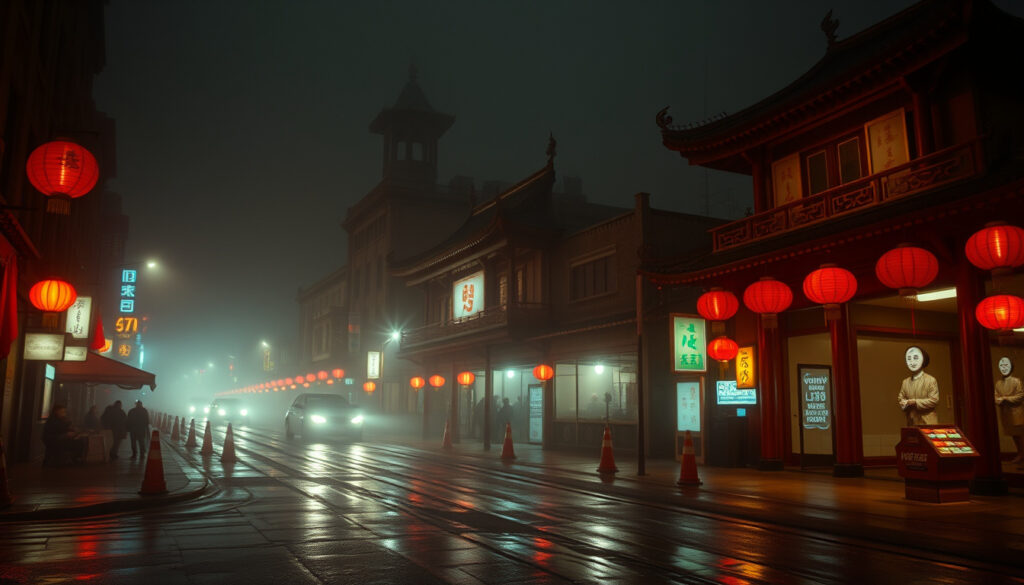
Big Trouble in Little China – From Flop to Cult Classic
Big Trouble in Little China stands as one of the most distinctive genre-blending films of the 1980s. Released in 1986 and directed by John Carpenter, the movie combines elements of fantasy, martial arts, horror, and comedy into a unique cinematic experience that defied easy categorization. Despite initial commercial disappointment, the film has grown into a beloved cult classic with enduring influence on both filmmaking and popular culture.
The story follows Kurt Russell as Jack Burton, a brash and overconfident truck driver who finds himself caught up in supernatural events within San Francisco’s Chinatown. What begins as a simple trip to the airport to meet his friend Wang Chi’s fiancée quickly escalates into a battle against ancient curses, mystical sorcerers, and otherworldly forces. The film’s blend of Eastern mythology with Western action sensibilities created something genuinely unlike anything produced during the era.
Over the decades since its release, Big Trouble in Little China has accumulated a passionate fanbase and critical reassessment that has elevated it from box office disappointment to genuine cult status. Its influence can be traced through numerous films, television shows, and video games that have drawn inspiration from its visual style, humor, and genre-defying approach to storytelling.
What Is Big Trouble in Little China About?
The narrative centers on Jack Burton, a loud-mouthed truck driver who considers himself a tough guy capable of handling any situation. After winning a bet with his friend Wang Chi, Jack accompanies him to the airport to pick up Wang’s fiancée Miao Yin. Their routine errand takes a dark turn when Miao Yin is kidnapped by the Lords of Death, a Chinatown street gang working on behalf of the ancient sorcerer Lo Pan.
The film’s antagonist, Lo Pan, represents a fascinating villain constructed from Chinese folklore and supernatural mythology. Cursed centuries ago to exist as an invisible spirit, Lo Pan requires the eyes of a green-eyed woman to break his curse and regain his physical form. Miao Yin possesses these rare green eyes, making her the target of Lo Pan’s schemes. A second green-eyed woman, journalist Gracie Law, also becomes entangled in the sorcerer’s plans.
The plot unfolds as Jack and Wang assemble a team to rescue Miao Yin, encountering various obstacles including the Three Storms—Thunder, Rain, and Lightning—supernatural warriors with elemental powers who serve Lo Pan. Their journey takes them through the underground lairs of the Wing Kong society, into the mysterious Room of the Upside-Down Hell, and ultimately to a climactic confrontation that resolves the immediate threat while leaving certain threads open-ended.
John Carpenter
Kurt Russell as Jack Burton
1986
Fantasy Action Comedy
Key Insights
- Box office flop turned cult hit: The film grossed only $11.1 million domestically against a reported budget of $19-25 million, but gained passionate fans through VHS and television broadcasts
- Genre-blending pioneer: Carpenter combined martial arts, horror, comedy, and fantasy in ways that influenced later films including The Matrix and Kung Fu Hustle
- Influential visual style: The film’s Chinatown mysticism and supernatural elements became a template for how Western media portrayed Eastern mythology
- Iconic one-liners: Dialogue like “It’s all in the reflexes” and “We take what we can get, fellas” became embedded in popular culture
- Repeated remake attempts: Various studios have pursued remakes since 2007, but none have materialized, with Carpenter publicly preferring the original remain untouched
- Successful collaboration: The Carpenter-Russell partnership, first established with Escape from New York, proved fruitful for both filmmakers
The film’s commercial failure stemmed partly from misleading marketing. Trailers promoted it as a straightforward action film starring the rugged Kurt Russell, leading audiences to expect traditional action rather than the comedy-fantasy hybrid Carpenter delivered. The timing also proved unfortunate, with the film competing against other major summer releases.
| Fact | Details |
|---|---|
| Runtime | 99 minutes |
| Budget | $19-25 million (exact figure varies by source) |
| US Box Office | $11.1 million (commercial failure) |
| Rotten Tomatoes Score | 68% (initial reviews mixed) |
| Release Date | June 20, 1986 |
| Rating Equivalent | PG-13 |
Who Stars in and Directed Big Trouble in Little China?
John Carpenter, already established as a genre-defining filmmaker with works like Halloween, The Fog, and Escape from New York, directed Big Trouble in Little China from a screenplay by Gary Goldman and David Z. Weinstein, based on a story by Goldman. Carpenter brought his distinctive visual style and understanding of genre conventions to the project, creating a film that played with audience expectations while delivering genuine scares and laughs.
The Lead Performers
Kurt Russell took on the role of Jack Burton, crafting a protagonist who serves as both narrator and unreliable observer of the supernatural events unfolding around him. Russell drew inspiration from the Indiana Jones character but deliberately made his version comically overmatched by the situations he encounters. His delivery of Jack’s self-aggrandizing one-liners became one of the film’s most memorable elements.
Dennis Dun portrayed Wang Chi, grounding the story as Jack’s level-headed friend whose personal stakes drive much of the plot. Wang’s fiancée Miao Yin was played by Suzee Pai, while Kim Cattrall took on the role of Gracie Law, the green-eyed journalist who becomes the second target of Lo Pan’s schemes.
The Antagonist and Supporting Cast
James Hong delivered a memorable performance as the cursed sorcerer David Lo Pan, creating one of cinema’s most distinctive villains by combining ancient mysticism with theatrical menace. Hong also portrayed the character Thunder, one of Lo Pan’s Three Storms enforcers, making him a particularly notable presence in the film.
The Three Storms consisted of Carter Wong as Rain, Peter Kwong as Lightning, and James Hong as Thunder, each possessing elemental powers that created practical effects challenges for the production team. Victor Wong portrayed Egg Shen, the mysterious confidence man who provides crucial assistance to the heroes, while supporting roles included Gerard Wong as Eddie Lee and Donald Li as Miao Yin’s uncle.
The practical effects used for the Three Storms and Lo Pan’s transformations required innovative techniques for the era. Carpenter’s team developed visual approaches that remained consistent with the film’s theatrical tone while achieving the supernatural elements the story demanded.
Why Is Big Trouble in Little China a Cult Classic?
The transformation of Big Trouble in Little China from commercial disappointment to cult favorite occurred gradually over several decades. Initial reviews upon its 1986 release were mixed, with critics divided over the film’s pacing, cultural representation, and genre identity. The Rotten Tomatoes consensus score of 68% reflected this tepid reception, with particular criticism directed at perceived stereotypical elements in the depiction of Chinatown characters.
The Home Video Era
The film’s cult status emerged primarily through home video and television broadcasts throughout the 1990s. As audiences discovered the movie outside its original theatrical context, appreciation grew for elements that had initially confused or alienated mainstream viewers. The film’s self-aware humor, visual inventiveness, and Russell’s charismatic performance resonated with viewers who encountered it as a rental or late-night television offering.
Critical Reappraisal
The 2001 DVD release brought renewed attention to the film, with enhanced presentation and supplementary features that introduced it to new generations. Streaming availability in the 2010s further expanded its reach, coinciding with a broader critical reassessment that elevated the film in retrospective rankings. Critics increasingly recognized Carpenter’s achievement in blending genres and subverting action movie conventions.
The film’s quotable dialogue contributed significantly to its cult status. Lines like “It’s all in the reflexes,” “I’m giving her everything I’ve got,” and “We take what we can get, fellas” became touchstones for fans who quoted them frequently. The repeated viewings necessitated by appreciation of these moments reinforced the film’s cult following.
Modern viewers sometimes note concerns about the film’s depiction of Chinese and Chinese-American characters. While the cast was primarily Asian-American, the portrayal drew from stereotypes that contemporary audiences may find problematic. These discussions represent part of the ongoing conversation about representation in 1980s Hollywood filmmaking.
What Is the Legacy of Big Trouble in Little China?
The influence of Big Trouble in Little China extends across multiple forms of media and has been acknowledged by numerous filmmakers and creators. According to Wikipedia, the film influenced subsequent works including Stephen Chow’s Kung Fu Hustle and the visual design of the Fallout video game series. The blend of supernatural elements with action filmmaking that Carpenter pioneered became a template that later creators would adapt and refine.
The Ending Explained
The film’s conclusion delivers resolution while maintaining thematic ambiguity. Lo Pan’s death at Jack’s hands breaks his ancient curse, causing Thunder to self-destruct in rage and Lightning to meet a more comically ironic fate. Wang kills Rain, freeing Miao Yin and the other captives. Wang proposes to Miao Yin as the group escapes in Jack’s truck, with the Wild-Man—a monster they encountered earlier—stowing away in the vehicle’s back.
Jack’s final monologue reveals his transformation. While initially dismissive of the supernatural events as mere chaos, he now acknowledges that magic exists and that he witnessed it firsthand. His closing line, describing how some people get what they want while others get nothing but trouble, encapsulates the film’s thematic interest in luck, fate, and self-perception.
Remake Attempts and Cultural Persistence
Multiple remake attempts have surfaced over the years, none of which have progressed beyond announcement stages. Rotten Tomatoes reports that 20th Century Fox announced a remake in 2007 with Kurt Russell attached as producer. MGM pursued a version in 2015 with Dwayne Johnson reportedly eyed for the lead role. Most recently, Russell and filmmaker Leigh Whannell discussed a pitch in 2020, though Carpenter has publicly stated his preference that the original film remain untouched.
The film continues to maintain cultural relevance through references in contemporary media. Television series like The Goldbergs and Rick and Morty have featured homages to the film’s style and characters. Jack Burton’s image and quotes circulate widely across social media platforms, introducing the character to audiences unfamiliar with the original film.
Pop Culture References
The film’s meme culture primarily centers on Jack Burton’s bravado and memorable one-liners. These digital artifacts serve as vectors for cultural transmission, bringing elements of the film to audiences who might never actively seek it out. Such references function as a form of cultural currency, with familiarity with the quotes serving as markers of genre film appreciation. The film’s enduring legacy is evident in its continued presence in popular culture, much like the ongoing adventures of Pirates of the Caribbean 6.
Key Moments in Big Trouble in Little China’s History
- 1985: Principal photography takes place in San Francisco’s Chinatown and various studio locations
- June 20, 1986: The film premieres in United States theaters
- Summer 1986: Commercial release fails to meet expectations, grossing $11.1 million domestically against production costs
- 1990s: Home video and television broadcasts cultivate an initial cult following
- 2001: DVD release with enhanced features introduces film to new audiences
- 2010s: Streaming availability and critical reassessment elevate the film’s reputation
- 2020: Kurt Russell and Leigh Whannell pitch remake concept that does not proceed
What Facts Are Established and What Remains Unclear?
Established Information
- The film was released on June 20, 1986
- Kurt Russell stars as Jack Burton
- John Carpenter directed the production
- James Hong portrayed Lo Pan and Thunder
- The runtime is 99 minutes
- The film was a commercial disappointment
- It has achieved cult classic status
- Multiple remake attempts have been announced without result
Information That Remains Unclear
- Exact budget figure varies between sources ($19-25 million reported)
- Specific details about Lo Pan’s mythological origins vary across adaptations
- The Wild-Man’s fate remains ambiguous at the film’s conclusion
- Precise nature of the confidence-boosting potion’s effects is not fully explained
- Whether certain practical effects were achieved through optical printing or other techniques
Understanding the Film’s Context
Big Trouble in Little China emerged during a transitional period in Hollywood filmmaking when American studios sought to incorporate elements from Hong Kong cinema. The 1980s saw increased distribution and appreciation for martial arts films in Western markets, creating appetite for productions that could blend Eastern action sensibilities with Western storytelling approaches.
Carpenter’s approach distinguished itself by treating the supernatural elements with genuine seriousness rather than purely comedic effect. The film draws from genuine Chinese mythological traditions, including concepts like the curse upon Lo Pan, the elemental powers of the Three Storms, and the supernatural geography of locations like the Room of the Upside-Down Hell. This grounding in recognizable mythology gave the fantastical elements coherence that pure comedy might have sacrificed.
The character of Jack Burton represents a deliberate subversion of action hero conventions. Unlike protagonists who competently overcome obstacles, Jack frequently fails at his stated intentions while maintaining bluster that the narrative consistently undercuts. This ironic distance between self-perception and actual capability became a template that influenced subsequent genre deconstructions.
What Sources and Quotes Define the Film?
“We take what we can get, fellas.”
— Jack Burton’s opening monologue
“It is written in the book of the dead!”
— Lo Pan
“It’s all in the reflexes.”
— Jack Burton
The primary sources for information about the film include official Carpenter studio materials, interviews published in film magazines and books, and the production records maintained by 20th Century Fox. The official John Carpenter website describes the film as “a love letter to Hong Kong cinema,” providing authoritative context for Carpenter’s creative intentions.
Film scholars have examined the production as an example of American filmmakers engaging with Asian cinema traditions during the 1980s. Critical analyses have explored the film’s treatment of gender, ethnicity, and the construction of masculinity in action cinema contexts.
The film’s reception history and cultural impact have been documented extensively through contemporary reviews, retrospective analyses, and fan communities. Resources like Action Zone Fandom provide detailed information about the production and its legacy.
Final Thoughts on Big Trouble in Little China
Big Trouble in Little China represents a singular achievement in American genre filmmaking. Despite commercial failure upon initial release, the film has earned its place among cult classics through distinctive storytelling, memorable performances, and influential visual style. Its blend of supernatural horror, martial arts action, and comedic elements created a template that continues to inspire filmmakers today.
The enduring appeal of Jack Burton as a character speaks to the film’s understanding of self-perception and capability. His journey from overconfident bystander to reluctant participant in supernatural events mirrors classic hero transformations while maintaining an ironic distance that prevents earnest excess. For those exploring the film for the first time or revisiting it years later, Big Trouble in Little China offers a distinctive experience that defies easy categorization.
As streaming platforms continue to make the film accessible to new audiences, its influence on subsequent productions and its status as a cult touchstone appear secure. The attempts to remake the film, while unsuccessful, testify to its enduring appeal and the challenge of capturing what made the original distinctive. Those interested in exploring more mysteries with Kurt Russell and John Carpenter may also appreciate related works like Wake Up Dead Man and other collaborations in the mystery genre.
Frequently Asked Questions
Why is it called Big Trouble in Little China?
The title refers to the scale of the supernatural conflict occurring within the confined geographic setting of San Francisco’s Chinatown. Jack Burton becomes embroiled in ancient mystical troubles that extend far beyond what his initial expectations of a simple rescue mission would suggest.
Where can I watch Big Trouble in Little China?
Streaming availability varies over time. The film has historically appeared on platforms like Peacock and Prime Video, and digital rental options through services like iTunes and YouTube regularly change. Checking current streaming platforms provides the most accurate availability information.
Is there a remake of Big Trouble in Little China?
No remake has been produced despite multiple announcements over the years. Attempts surfaced in 2007, 2015, and 2020 with various actors attached, but none progressed into actual production. Director John Carpenter has publicly stated his preference that the original remain untouched.
What does the ending of Big Trouble in Little China mean?
The ending suggests Jack’s transformation from skeptic to believer in the supernatural. His acknowledgment of magic and acceptance of his role in the events, combined with the survival of the Wild-Man in his truck, implies both closure and the possibility of future complications.
Are the knife-throwing scenes accurate?
The knife-throwing scenes play with the running gag that Jack consistently misses his throws while somehow catching return throws from opponents. This comic inconsistency serves the character study rather than presenting realistic martial arts technique.
Who composed the music for the film?
John Carpenter composed the score with John Tuey. The soundtrack incorporates elements that complement the film’s genre-blending approach, combining traditional horror scoring with musical cues appropriate to the Chinatown setting and comedic moments.
What is the Three Storms’ significance?
The Three Storms—Thunder, Rain, and Lightning—serve as Lo Pan’s supernatural enforcers, each possessing elemental powers. They function both as obstacles for the protagonists and as visual showcases for practical effects that emphasize the film’s fantastical elements.
More related posts
 Raven Symone – Net Worth 2025, Career, and Personal Life
 Valley of the King – Complete 2025 Vi itor Guide
 Women’s Jacket 2025 – Best Brands, Styles and Where to Buy UK
 Summer Walker – Biography Songs Albums and Personal Life
 Cast of Power (TV Series) – Full Actors List and Roles Guide
 Joanne Froggatt – Biography, Husband, Net Worth and Awards
 Colin McRae – Rally Legend, Tragic Helicopter Crash, and Enduring Legacy
 People Famous – Most Famous People in the World 2025
