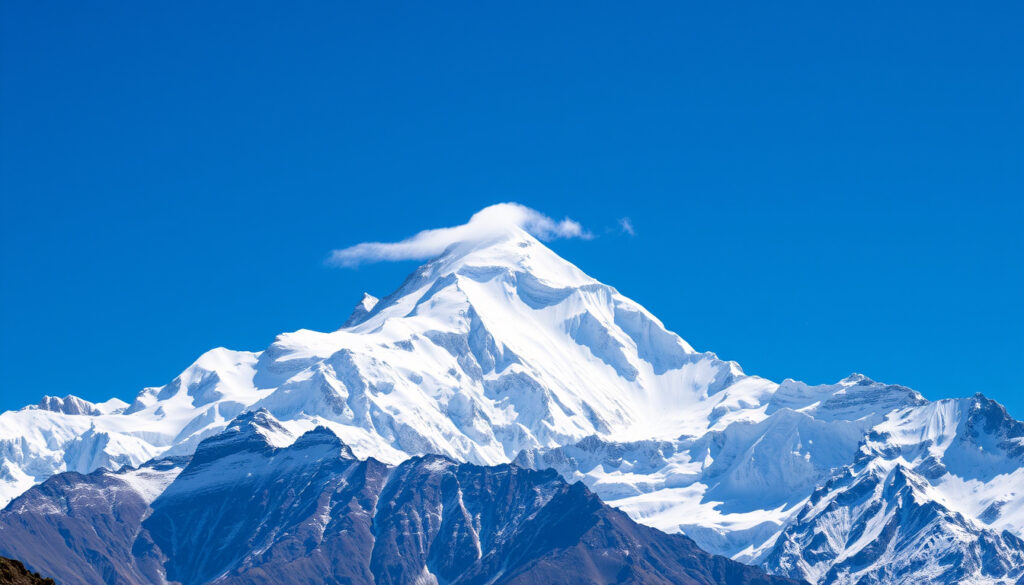
Mount Everest Peak – Complete Guide to the World’s Tallest Peak
Mount Everest Peak is the highest point on Earth, a summit that has drawn explorers, scientists, and adventurers for generations. Rising to an official height of 8,848.86 meters (29,031.69 feet), the mountain straddles the border between Nepal and Tibet, China, and is known locally as Sagarmāthā and Qomolangma. Its first recorded ascent in 1953 by Edmund Hillary and Tenzing Norgay marked a milestone in human achievement, but the peak also carries a somber reality: hundreds of bodies remain on its slopes, a testament to the extreme dangers of high-altitude climbing.
Despite decades of exploration, the mountain continues to reveal new facts and controversies. The exact height was only settled in 2020 after a joint survey between Nepal and China. The number of climbers has surged, raising questions about overcrowding, safety, and environmental impact. This article provides a comprehensive, fact-based overview of Mount Everest Peak, covering its height, location, history, the bodies left behind, and how to reach its base camp.
Whether you are a trekker planning a base camp journey, a student researching the world’s tallest peak, or simply curious about the mountain’s mysteries, the following sections break down the essential information. All facts are drawn from official surveys, historical records, and reputable mountaineering databases.
How Tall Is Mount Everest Peak?
Height
8,848.86 m (29,031.7 ft)
Location
Nepal / Tibet (China) • Asia
First Ascent
Edmund Hillary & Tenzing Norgay (1953)
Known Bodies
Estimated 300+ (unrecovered)
- The official height of Mount Everest was re-measured in 2020 by Nepal and China jointly, settling decades of discrepancy at 8,848.86 m.
- Everest is located on the border of Nepal (Khumbu region) and Tibet (China), making its governance a shared matter.
- The first successful summit was on May 29, 1953, by Sir Edmund Hillary and Tenzing Norgay via the South Col route.
- Over 300 climbers have died on Everest, with the majority of bodies remaining on the mountain due to extreme conditions and cost of recovery.
- The Everest Base Camp trek (South Side, Nepal) is one of the world’s most popular adventure treks, attracting over 30,000 hikers annually.
| Fact | Value |
|---|---|
| Official elevation | 8,848.86 m (29,031.7 ft) |
| Coordinates | 27°59′18″N 86°55′31″E |
| Countries | Nepal (south) and China (Tibet, north) |
| First successful ascent | 29 May 1953 (Hillary & Norgay) |
| First winter ascent | 17 Feb 1980 (Leszek Cichy & Krzysztof Wielicki) |
| Total summiteers | ~11,000 as of 2024 |
| Total fatalities | ~340 as of 2024 (all-time) |
| Most common route | South Col (Nepal) |
| Death zone altitude | Above 8,000 m (26,247 ft) |
| Age of summit rocks | ~450 million years (Ordovician) |
The height of Everest has been a subject of debate for over a century. The current official measurement of 8,848.86 meters was jointly announced by Nepal and China in December 2020, ending a long-standing disagreement over whether to include the snow cap or measure only the rock peak. Historical measurements include 8,840 m (29,002 ft) from the 1856 Great Trigonometrical Survey of India, 8,848 m (29,029 ft) from Nepal in 1955, and 8,844.43 m for the rock height measured by China in 2005. The 2010 agreement settled on 8,848 m, but the 2020 survey provided the precise figure accepted today.
For perspective, that is roughly 5.5 miles above sea level. The peak is still growing by about 4–6 mm per year due to ongoing tectonic activity from the collision of the Indian and Eurasian plates.
Where Is Mount Everest Peak Located?
Mount Everest is situated in the Mahalangur Himal sub-range of the Himalayas, on the border between Koshi Province, Nepal and the Tibet Autonomous Region, China. The summit itself marks the international boundary. Locally, it is known as Sagarmāthā in Nepal and Qomolangma in Tibet.
The mountain lies between Solukhumbu District (Nepal) and Tingri County (Tibet). The South Base Camp in Nepal sits at 5,364 m, while the North Base Camp in Tibet is at 5,515 m. The coordinates of the summit are 27°59′18″N 86°55′31″E.
Because the peak straddles two countries, climbing permits and access are regulated separately. Most commercial expeditions approach from the south side in Nepal, but the north side from Tibet is also a viable route. The mountain is in the continent of Asia, and the nearest major city is Kathmandu, Nepal, about 160 km to the southwest.
For those interested in other high peaks, check out Mount Toubkal – Complete Guide to North Africa’s Highest Peak for a comparison of altitude challenges in different ranges.
Who Was the First to Climb Mount Everest Peak?
The first documented ascent of Mount Everest was achieved on May 29, 1953, at 11:30 AM by Sir Edmund Hillary of New Zealand and Tenzing Norgay of Nepal. They reached the summit via the Southeast Ridge route, starting from the South Base Camp in Nepal. The expedition was organized by the British and led by Colonel John Hunt.
Before 1856, the peak was not even known to be the highest; Kanchenjunga (28,156 ft) was believed to be the tallest. The Great Trigonometrical Survey of India first identified Everest as Peak XV and assigned it the highest elevation. The mountain was later named after Sir George Everest, the British Surveyor General of India.
The 1953 ascent remains one of the most celebrated feats in mountaineering history. Hillary and Norgay spent only about 15 minutes on the summit, taking photographs and leaving a few objects. Their achievement paved the way for thousands of subsequent climbers.
What Are the Bodies on Mount Everest?
One of the most haunting aspects of Mount Everest is the presence of deceased climbers whose bodies remain on the mountain. Estimates suggest that over 300 people have died on Everest, with the majority of bodies never recovered. The exact number is unknown because no comprehensive inventory exists, and many bodies are hidden in crevasses or buried under snow.
The extreme altitude above 8,000 m – the so-called “death zone” – makes rescue and recovery operations nearly impossible. The human body cannot acclimatize at that height, and the thin air, extreme cold, and high risk of avalanches or falls mean that recovery missions are often too dangerous and costly. Bodies are frequently found at landmarks like the Balcony (8,400 m) and near Camp 4.
Despite the grim statistics, Everest is actually not the deadliest 8,000m peak. It has a relatively low death rate compared to mountains like Annapurna (3.30% death rate) or K2 (historically around 1.25% but improved). The robust support infrastructure, fixed ropes, and high number of successful summits contribute to a lower fatality rate per ascent. However, the absolute number of deaths remains high because of the large number of climbers each year.
The issue of bodies on Everest is both practical and ethical. Some families request recovery, but many expeditions and governments accept the mountain as a final resting place. The bodies serve as grim landmarks and stark reminders of the mountain’s dangers.
How to Reach Mount Everest Base Camp?
The most popular way to experience Everest without climbing the peak is the Everest Base Camp trek on the Nepal side. The trek typically begins with a flight from Kathmandu to Lukla (2,860 m), followed by a 6–8 day hike through Sherpa villages, including Namche Bazaar, to reach the South Base Camp at 5,364 m.
The route is strenuous but does not require technical climbing skills. It offers stunning views of Everest, Lhotse, and Ama Dablam. Acclimatization days are built into the itinerary to help trekkers adjust to the altitude. The best seasons are spring (March–May) and autumn (September–November).
For those preferring the Tibetan side, the North Base Camp trek is an alternative, but it requires a permit from China and is less frequented by independent trekkers. Both base camps are used by mountaineers preparing for summit attempts.
If you are planning an international travel adventure, you might also find the St Kitts Nevis – Country Facts, Passport Rank and Travel Guide useful for understanding entry requirements and travel logistics.
Timeline of Mount Everest Peak Measurement and Notable Events
- 1856 – Great Trigonometrical Survey of India assigns initial height of 29,002 ft (8,840 m), naming it Peak XV.
- 1953 – First ascent by Edmund Hillary and Tenzing Norgay on May 29.
- 1975 – Chinese survey reports height 8,848.13 m; Nepal later uses 8,848 m.
- 1999 – GPS survey by National Geographic Society yields 8,850 m (29,035 ft).
- 2020 – Joint Nepal-China survey establishes official height of 8,848.86 m, accepted by both countries.
- 2023 – Record number of permits (478) issued by Nepal.
Certainty vs. Uncertainty on Mount Everest Peak Facts
| Topic | Established Information | Remains Unclear |
|---|---|---|
| Official height | High – 8,848.86 m (2020 joint survey; widely accepted) | Previous measurements differed by up to 2 m; now resolved |
| Number of bodies on Everest | Low – exact count unknown; estimates range from 200 to over 300 unrecovered bodies | No comprehensive inventory, many not visible or in crevasses |
| First ascent details | High – Hillary and Norgay’s summit is well documented; minor debate on whether they both set foot exactly simultaneously | One dispute remains about possible earlier undocumented attempts |
| Exact number of summiteers and deaths | Moderate – Himalayan Database tracks actively; but some unconfirmed climbs/deaths may exist | Permit-based records may miss unguided or illegal ascents |
Geological and Climbing Context
Mount Everest formed about 50 million years ago when the Indian Plate collided with the Eurasian Plate. The peak is still rising approximately 4 mm per year due to continued tectonic activity. The summit rocks are about 450 million years old, dating back to the Ordovician period.
The “death zone” above 8,000 m makes rescue nearly impossible. Bodies that remain serve as grim landmarks and also create cultural and ethical dilemmas for families and expeditions. The political context also matters: Nepal and China disagreed on Everest’s height for decades due to different measurement techniques and whether to include snow height versus rock height. The 2020 joint survey finally resolved this dispute.
Sources and Quotes
“It is not the mountain we conquer but ourselves.”
— Sir Edmund Hillary
The 2020 Nepal-China Joint Survey established the official height of Mount Everest at 8,848.86 meters. The Himalayan Database maintains comprehensive records of all Everest ascents and fatalities. Britannica describes Mount Everest as the Himalayan mountain peak on the border of Nepal and Tibet, China. Additional authoritative sources include the Nepal Department of Tourism, National Geographic, and the Joint Survey Report (2020).
What’s Next for Mount Everest Peak?
Nepal is considering stricter permit quotas due to overcrowding, as the number of climbers continues to rise. Climate change is destabilizing glaciers and routes, potentially altering climbing seasons. Remote sensing technology may soon help map the exact number of bodies on the mountain, providing data for future recovery planning. Despite these challenges, Everest remains the ultimate goal for many mountaineers and trekkers worldwide.
Frequently Asked Questions About Mount Everest Peak
How long does it take to climb Mount Everest?
Most expeditions take about 60–70 days including acclimatization. The summit push itself is a two-day window from Camp 4.
How much does it cost to climb Everest?
Permits range from $11,000 (Nepal) to $15,000+ (Tibet). Full guided expeditions cost $35,000–$85,000.
What is the death zone on Everest?
The area above 8,000 m (26,247 ft) where oxygen is insufficient to sustain life, leading to altitude sickness, hypothermia, and increased risk of death.
Is Mount Everest still growing?
Yes, due to ongoing tectonic activity, Everest rises approximately 4–6 mm per year.
Why are there so many bodies on Everest?
The extreme altitude, cost of recovery, and risk to rescue teams mean many bodies are left in place, often becoming landmarks.
How many people have summited Everest?
As of 2024, approximately 11,000 summits have been recorded, with about 1,200 climbers having summited by the end of 2002.
What is the difference between Everest and K2?
Everest is about 237 m taller than K2 (8,611 m). K2 is located in Pakistan and has a historically higher death rate, though both are extremely dangerous.
Can you see Everest from Kathmandu?
On very clear days, Everest is visible from viewpoints around Kathmandu, but the mountain is about 160 km away, so it appears small.
What is the most popular route to climb Everest?
The Southeast Ridge route from Nepal is the most frequently used, accounting for the majority of successful ascents.
How many people die on Everest each year?
The annual death toll varies, but on average 5–10 climbers die per season. The all-time fatality count is around 340 as of 2024.
More related posts
 David Guetta – Net Worth, Biography and 2025 Updates
 Diane Lane – Biography, Movies, Net Worth, and Personal Life 2025
 Joanne Froggatt – Biography, Husband, Net Worth and Awards
 PS5 Games Coming Soon – Full 2026 Release Guide
 Can You Drink On Antibiotics – Myths, Facts & Expert Guide
 Manchester United vs Burnley Standings – 2025/26 Positions & Results
 Thomas Partey – Rape Charges, Court Case & World Cup 2026
 Varada Sethu – Biography, Career and Personal Life
