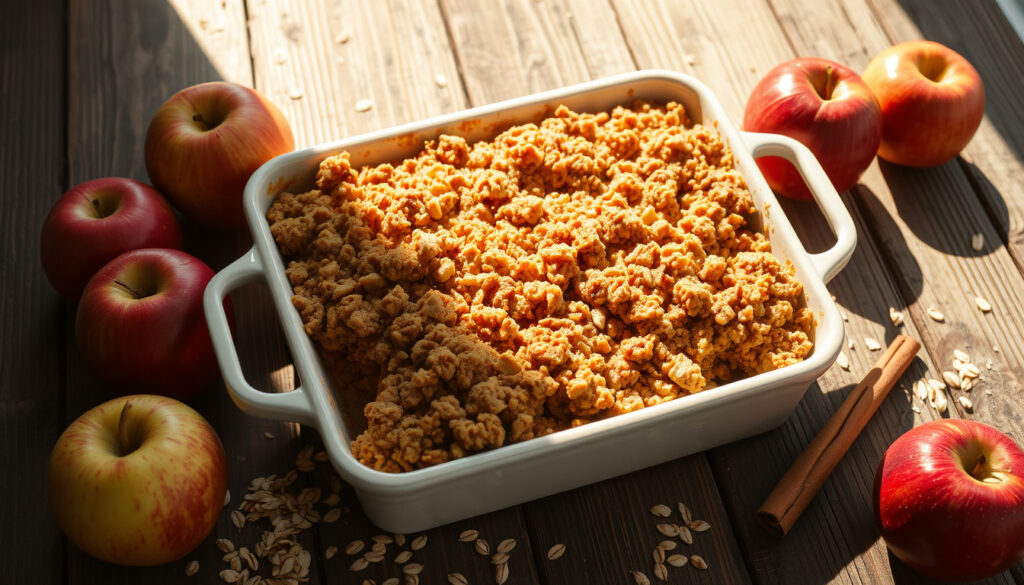
How to Make Apple Crumble – Easy Classic Recipe & Tips
A well-made apple crumble is one of the simplest and most satisfying British desserts. With a soft, tart apple filling and a golden, buttery topping, it has earned a place on kitchen tables across the country. Getting the balance right between fruit and crumble is straightforward once you know the basics, and the recipe leaves plenty of room for personal touches.
The classic version calls for cooking apples, flour, butter and sugar. Many home cooks turn to trusted names such as Mary Berry for guidance, while others prefer a heartier topping with oats or a fruity twist like apple and blackberry. Whichever route you take, the process remains remarkably simple and forgiving.
This guide covers the ingredients, the method, expert variations, storage tips and the history behind the dish. Everything here is drawn from established recipes and verified sources.
What are the best ingredients for an apple crumble?
The quality of an apple crumble depends largely on the ingredients you choose. Each component plays a specific role, and small changes can alter the texture and flavour noticeably.
- Bramley apples are the classic UK choice due to their tartness and soft texture when baked.
- A 2:1 ratio of flour to butter (by weight) gives a crumbly, not greasy, topping.
- Adding oats to the topping adds texture and makes it more rustic, often called Irish-style.
- Freezing crumble mix (raw topping and fruit separately) extends shelf life up to 3 months.
- Mary Berry’s recipe uses a shortcrust-style crumble with extra butter; Delia Smith prefers a lighter touch.
| Classic BBC Good Food | Bramley | Flour, butter, sugar | 190°C | 35-40 min |
| Mary Berry | Bramley or Granny Smith | Flour, butter, sugar (extra butter) | 180°C | 30-35 min |
| Donal Skehan Oaty | Bramley | Flour, oats, butter, sugar | 190°C | 35 min |
| Spend With Pennies | Any baking apple | Flour, oats, brown sugar, butter | 190°C | 35-40 min |
The classic British choice for apples remains the Bramley. As noted by Prima, Bramleys are favoured because they are very tart, soften when cooked, and balance the sweetness topping well. Other firm baking apples such as Granny Smith can be used, though you may need to adjust the sugar.
Butter should be cold when you rub it into the flour, as this creates the breadcrumb-like texture that defines a good crumble. Plain flour is the standard base, while brown sugars such as muscovado or demerara add depth and crunch.
How to make a simple apple crumble recipe?
Start by peeling, coring and slicing your apples. Bramleys are ideal. Cook them gently in a pan with a little butter and water until they begin to soften. Stir in sugar — light muscovado works well — and let the mixture cool slightly before transferring to a baking dish.
Making the crumble topping
In a bowl, rub cold butter intill the mixture resembles breadcrumbs. Stir in demerara sugar. The proportion should be roughly 2:1 flour to butter by weight. This creates a topping that bakes to a golden, crumbly finish.
Sprinkle the topping evenly over the fruit and avoid pressing it down. This allows air to circulate during baking, which helps the crumble stay crisp rather than turning dense.
Baking the crumble
Preheat the oven to 200°C (180°C fan). Bake for about 20 minutes, then reduce the temperature to 180°C (160°C fan) and bake for another 20 minutes. The crumble should be golden brown and the fruit bubbling at the edges. Serve hot with custard, cream, ice cream or crème fraîche.
The Mary Berry recipe from The Happy Foodie follows this two-temperature method and is widely regarded as a reliable baseline for home bakers.
For another approach, the BBC Good classic version uses a single oven temperature of 190°C and suggests tossing the sliced apples with golden caster sugar before topping.
What are the best celebrity chef apple crumble recipes?
Several well-known cooks have put their own stamp on apple crumble. Mary Berry and Delia Smith are among the most influential in the UK, and their recipes offer contrasting styles.
Mary Berry’s classic apple crumble
Mary Berry’s recipe is straightforward and traditional. It uses 1.5kg of cooking apples, cooked gently with butter and a little water, then sweetened with light muscovado sugar. The topping is made from plain flour, butter and demerara sugar. The bake begins at 200°C (180°C fan) for 20 minutes, then drops to 180°C (160°C fan) for another 20 minutes.
As reported by Silver Spoon, a taste test comparing Mary Berry’s version with Jamie Oliver’s gave Berry high marks for ease of baking (9/10) and overall balance. Her version scored 7/10 in the taste test and was described as very easy to bake.
Mary Berry’s apricot and hazelnut variation
Prima highlights a Mary Berry variation that adds dried apricots, apple juice and hazelnuts to the crumble topping. The Bramley apples remain the base, but the dried fruit and nuts create a more textured and fruit-forward dessert with a nutty crunch.
Delia Smith’s approach
Delia Smith’s apple crumble is known for a lighter touch with the topping. While her exact recipe is not detailed in the available sources, her version is often described as using less butter than Mary Berry’s, resulting in a more delicate crumb.
The BBC Food apple crumble recipe is another trusted reference, offering metric and imperial measurements and a straightforward method that many home cooks rely on.
How to vary your apple crumble?
Apple crumble adapts well to different tastes and seasonal ingredients. A few simple changes can transform the dish without moving far from the original method.
Apple and blackberry crumble
Adding blackberries to the apple filling introduces a sharper, fruitier note. Use roughly equal quantities of apples and blackberries. The blackberries break down during baking and release juice, so you may want to reduce the sugar slightly to keep the filling from becoming too sweet.
Oat topping
Oats can be added to the crumble topping for extra texture and a more rustic finish. A common oat crumble uses plain flour, butter, sugar and oats. The oats make the topping nubbly, chewy and heartier than a plain flour crumble. This style is sometimes referred to as Irish oaty apple crumble, as seen in Donal Skehan’s recipe.
Classic crumble uses only flour, butter and sugar. Oat crumble adds oats to that base, which creates a chewier, crispier finish. The two are similar but produce noticeably different textures.
Apple crumble pie
Apple crumble pie combines a pastry base with a crumble topping. Instead of a top crust, the filled pie is finished with a layer of crumble mixture and baked until golden. This is sometimes called apple crumb pie in the United States.
If you add a pastry base, the total baking time may increase by 10-15 minutes. The pastry needs to cook through without burning the crumble topping. Cover the topping with foil if it browns too quickly.
Freezing and make-ahead
Mary Berry’s recipe includes practical notes for advance preparation. The crumble can be assembled up to six hours ahead and kept in the fridge. It also freezes well when assembled uncooked. To freeze, prepare the apple filling and topping separately, assemble in a dish, then freeze before baking. Bake from chilled or thawed depending on your timing.
How did apple crumble become a British classic?
Apple crumble as it is known today emerged during a period of scarcity and evolved through the influence of several generations of home cooks and cookbook authors.
- 1939-1945: Apple crumble became popular during the Second World War due to rationing. Flour, butter and sugar were limited, but the crumble topping used fewer ingredients than a traditional pie crust, making it an economical choice.
- 1970s: Delia Smith’s recipe brought apple crumble to a new generation of home cooks. Her measured, clear style helped standardise the method in British kitchens.
- 1990s: Mary Berry’s version became widely known through her cookbooks and television programmes. Her recipe reinforced the classic formula of tart apples, buttery topping and precise baking temperatures.
- 2010s: Oat and gluten-free variations gained traction as home baking trends shifted toward texture experimentation and dietary adaptations. Food blogs and celebrity chefs expanded the range of accepted crumble styles.
The National Trust’s classic apple crumble recipe reflects this enduring tradition, offering a version rooted in the same wartime-era simplicity that made the dish a staple.
Should you pre-cook apples for apple crumble?
This is one of the more debated questions among home bakers. The available sources show that different cooks take different approaches, and the choice affects the final texture of the filling.
Established facts
- Standard crumble topping uses a 2:1 ratio of flour to butter by weight.
- Bramley apples are widely considered the best choice for a soft, sharp filling.
- You can prepare crumble mix ahead and refrigerate or freeze it without baking.
- Mary Berry pre-cooks the apples gently with butter and water before adding sugar.
What remains unclear
- Whether to pre-cook apples is not universally agreed; some chefs skip this step to avoid a mushy texture.
- The ideal baking dish material — metal versus ceramic — leads to different browning results, and no single recommendation dominates.
- The best sugar type is also debated: golden caster, light brown and demerara each alter the topping’s texture and flavour in different ways.
If you follow Mary Berry’s method, you cook the apples first. Other recipes, including some from BBC Good Food, suggest tossing raw sliced apples with sugar and flour before topping and baking. Both approaches can work, but they produce different filling consistencies.
Why is apple crumble a British staple?
Apple crumble occupies a unique place in British home cooking. It is simple enough for a beginner, yet open enough for endless variation. During wartime rationing, it offered a way to make a dessert with limited ingredients, and that frugal, resourceful character has stayed with it.
Modern trends have expanded the recipe in several directions. Oat toppings, gluten-free flour blends, vegan butter substitutes and nut-based crumbles have all become common. Celebrity chef versions, particularly those by Mary Berry and Delia Smith, have added a layer of authority and nostalgia that keeps the dish relevant.
The Spend With Pennies apple crumble recipe shows how the dish has also been adapted in North America, where it overlaps with the concept of apple crisp. In the UK, crumble remains the standard term, while crisp usually implies the presence of oats.
What do the experts say about making apple crumble?
Several authoritative voices have shared their specific methods and tips for apple crumble. The following quotes come from published recipes and reflect the approaches of trusted sources.
“Toss 575g peeled, cored and sliced Bramley apples with 2 tbsp golden caster sugar…”
— BBC Good Food
“In a large baking tin, toss the apples with the flour, sugar and lemon juice until combined.”
— Donal Skehan
“The secret to a perfect crumble is to rub the butter into the flour until it resembles breadcrumbs, then sprinkle over the fruit.”
— Mary Berry
These quotes illustratea shared principle: the quality of the topping depends on how well the butter is incorporated into the flour. The breadcrumb stage is the goal across all versions.
What is the best way to make apple crumble at home?
The best approach is to start with the classic method and adjust from there. Use Bramley apples, a 2:1 flour-to-butter topping, and a two-temperature bake if you want to follow Mary Berry’s proven formula. If you prefer a chewier texture, add oats. If you have blackberries in season, add those too. The dish is forgiving, and the basic steps are the same regardless of the variation you choose. For another comforting recipe, see this How to Make Hash Browns – Crispy Homemade and Air Fryer Guide or this Butternut Squash Soup Recipe – Creamy Roasted and Easy Methods.
Common questions about apple crumble
Can I use apples other than Bramley?
Yes, Granny Smith, Honeycrisp, or any firm baking apple. You may need to adjust sugar depending on the sweetness of the fruit.
Why is my crumble topping soggy?
Likely too much butter or not enough flour. Also, ensure topping is evenly sprinkled and the oven is hot before baking.
How long does apple crumble last in the fridge?
Covered, it keeps 3-4 days. Reheat in the oven to crisp the topping rather than using a microwave.
What is the difference between apple crumble and apple crisp?
Crisp typically includes oats and nuts in the topping; crumble is more flour-based. In the UK, crumble is the standard term.
Can I make apple crumble pie?
Yes, a pie base with crumble topping instead of a top crust. This is often called apple crumb pie in the US.
Can I freeze apple crumble before baking?
Yes, assemble the dish uncooked and freeze. Bake from frozen, adding 10-15 minutes to the usual time.
What is the best sugar for the topping?
Demerara sugar adds crunch and a rustic look. Muscovado gives a deeper, caramel-like flavour. Both work well.
Do I need to peel the apples?
Peeling is recommended for a smooth filling. Some recipes leave the skin on for extra texture, but this is less common.
Can I make a vegan apple crumble?
Yes, substitute butter with coconut oil or vegan butter. The topping will still be crumbly if the fat is cold when rubbed in.
More related posts
 Saoirse Ronan – Bio, Movies, Age, Height, Husband & More
 Tracy Morgan – Biography, Net Worth, Accident and 2025 Update
 Mickey Mouse – Complete Guide to History, Clubhouse, and Videos
 Sophie Dahl – Biography, Career, and Family Life
 Rob Lowe – Biography, Age, Net Worth, and Family
 FC Barcelona vs Real Madrid Lineups – Predicted XIs and Injury News
 Ultimate Warrior – Cause of Death, Real Name, and Career
 Nat King Cole – Biography, Songs, Death and Legacy
