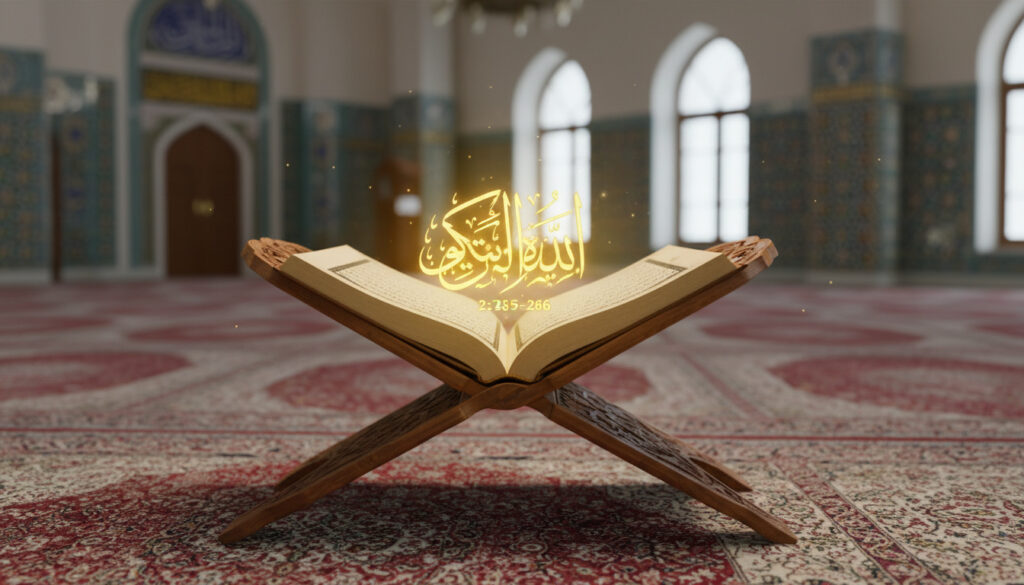
Surah Baqarah Last 2 Ayah – Text, Translation, Virtues
The final two verses of Surah Al-Baqarah stand as one of the most cherished passages in Islamic scripture, offering believers a comprehensive framework of faith and a powerful supplication for divine mercy. Recited by millions before sleep each night, these ayahs carry profound significance rooted in authenticated prophetic traditions.
Ayat 285 and 286 conclude the longest chapter of the Quran with a declaration of complete submission to Allah and a plea for burden-easing grace. Their reputation for spiritual protection has made them a staple of nightly worship across diverse Muslim communities worldwide.
This examination presents the authoritative Arabic text, verified translations, scholarly interpretations, and practical guidance for integrating these verses into daily spiritual practice.
What Are the Last Two Ayahs of Surah Al-Baqarah?
- Recitation provides spiritual nourishment and protection until dawn according to authenticated hadith
- Revealed during the Prophet’s Night Journey (Mi’raj) as a unique treasure from beneath the Divine Throne
- Affirm belief in all prophets without distinction between their messages
- Serve as comprehensive supplication for mercy, pardon, and burden-easing
- Grant forgiveness for major sins for those who die without associating partners with Allah
- Function as sufficient protection against Shaytan when incorporated into nightly routine
- Require approximately 60-120 seconds for proper recitation
| Attribute | Value |
|---|---|
| Surah | Al-Baqarah (Chapter 2) |
| Ayah Numbers | 285-286 |
| Revelation Period | Medina (Medinan) |
| Total Ayahs in Surah | 286 |
| Approximate Word Count | ~100 words |
| Content Category | Aqeedah (Faith) and Dua (Supplication) |
| Hadith Status | Sahih (Bukhari and Muslim) |
| Special Virtue | Protection until Fajr |
| Revelation Circumstance | Isra and Mi’raj (Night Journey) |
| Source Authentication | Quran.com |
The Arabic Text and Transliteration
The Arabic text of these verses remains preserved in the Uthmanic mushaf standard. HalalTrip and EQuran Classes provide verified Arabic script alongside phonetic guides.
Arabic Text:
آمنَ الرَّسُولُ بِمَا أُنزِلَ إِلَيْهِ مِنْ رَبِّهِ وَالْمُؤْمِنُونَ ۚ كُلٌّ آمَنَ بِاللَّهِ وَمَلَائِكَتِهِ وَكُتُبِهِ وَرُسُلِهِ ۖ لَا نُفَرِّقُ بَيْنَ أَحَدٍ مِنْ رُسُلِهِ ۖ وَقَالُوا سَمِعْنَا وَأَطَعْنَا ۖ غُفْرَانَكَ رَبَّنَا وَإِلَيْكَ الْمَصِيرُ
لَا يُكَلِّفُ اللَّهُ نَفْسًا إِلَّا وُسْعَهَا ۚ لَهَا مَا كَسَبَتْ وَعَلَيْهَا مَا اكْتَسَبَتْ ۗ رَبَّنَا لَا تُؤَاخِذْنَا إِنْ نَسِينَا أَوْ أَخْطَأْنَا ۗ رَبَّنَا وَلَا تَحْمِلْ عَلَيْنَا إِصْرًا كَمَا حَمَلْتَهُ عَلَى الَّذِينَ مِنْ قَبْلِنَا ۗ رَبَّنَا وَلَا تُحَمِّلْنَا مَا لَا طَاقَةَ لَنَا بِهِ ۖ وَاعْفُ عَنَّا وَاغْفِرْ لَنَا وَارْحَمْنَا ۚ أَنْتَ مَوْلَانَا فَانْصُرْنَا عَلَى الْقَوْمِ الْكَافِرِينَ
Transliteration:
Āmanar-rasūlu bimā unzila ilayhi mir-rabbihi wal-mu’minūn. Kullun āmana billāhi wa malā’ikatihi wa kutubihi wa rusulih. Lā nufarriqu bayna aḥadin mir-rusulih. Wa qālū sami’nā wa aṭa’nā. Ghufrānaka rabbanā wa ilaykal-maṣīr.
Lā yukallifullāhu nafsan illā wus’ahā. Lahā mā kasabat wa ‘alayhā maḥtasabat. Rabbanā lā tu’ākhidhnā in nasīnā aw akhṭa’nā. Rabbanā wa lā taḥmil ‘alaynā iṣran kamā ḥamaltahu ‘alalladhīna min qablinā. Rabbanā wa lā tuḥammilnā mā lā ṭāqata lanā bih. Wa’fu ‘annā waghfir lanā warḥamnā. Anta mawlānā fansurnā ‘alal-qawmil-kāfirīn.
English Translation and Core Meaning
Ayah 285: The Messenger has believed in what was revealed to him from his Lord, and [so have] the believers. All of them have believed in Allah and His angels and His books and His messengers, [saying], “We make no distinction between any of His messengers.” And they say, “We hear and we obey. [We seek] Your forgiveness, our Lord, and to You is the [final] destination.” Source: Quran.com
Ayah 286: Allah does not charge a soul except [with that within] its capacity. It will have [the consequence of] what [good] it has gained, and it will bear [the consequence of] what [evil] it has earned. “Our Lord, do not impose blame upon us if we have forgotten or erred. Our Lord, and lay not upon us a burden like that which You laid upon those before us. Our Lord, and burden us not with that which we have no ability to bear. And pardon us; and forgive us; and have mercy upon us. You are our protector, so give us victory over the disbelieving people.” Source: HalalTrip
More related posts
 Emma Kenny – Media Psychologist and Crime Commentator
 Siouxsie Sioux – Biography, Age, Tour 2026 and Personal Life
 PS5 Games Coming Soon – Full 2026 Release Guide
 Nikki Glaser – Biography, Career, Net Worth, and Relationships
 Manchester United vs Burnley Standings – 2025/26 Positions & Results
 Luis Suarez – Full Career Profile, Stats and Controversies
 British Airways Business Class – 2025 Review Seats Food Value
