Napoleon Bonaparte – Biography, Height Myth and Legacy
Napoleon Bonaparte reshaped Europe through military conquest, legal reform, and a vision of centralized power that still influences modern governance. Born on the island of Corsica, he rose from provincial nobility to become Emperor of the French, leaving behind a complex legacy of innovation and destruction. His Napoleonic Code, the myth surrounding his height, and his final exile to Saint Helena are just a few elements of a life that continues to fascinate historians and the public alike.
Napoleon’s career spanned the chaos of the French Revolution, the consolidation of power as First Consul, and the grandeur of an empire that stretched across Europe. His military campaigns, from the Italian peninsula to the frozen plains of Russia, transformed warfare and redrew national borders. Yet his downfall came swiftly after the disastrous invasion of Russia in 1812 and the decisive defeat at Waterloo in 1815.
Understanding Napoleon requires separating fact from fiction, examining both his achievements and the myths that have grown around him. This article draws on multiple authoritative sources to present a clear, fact-based portrait of the man who once commanded the most powerful army in Europe.
Who Was Napoleon Bonaparte? A Complete Biography
| Category | Detail |
|---|---|
| Full Name | Napoleon Bonaparte (Napoléon Bonaparte) |
| Born | 15 August 1769, Ajaccio, Corsica |
| Died | 5 May 1821, Longwood, Saint Helena |
| Title | Emperor of the French (1804–1814, 1815) |
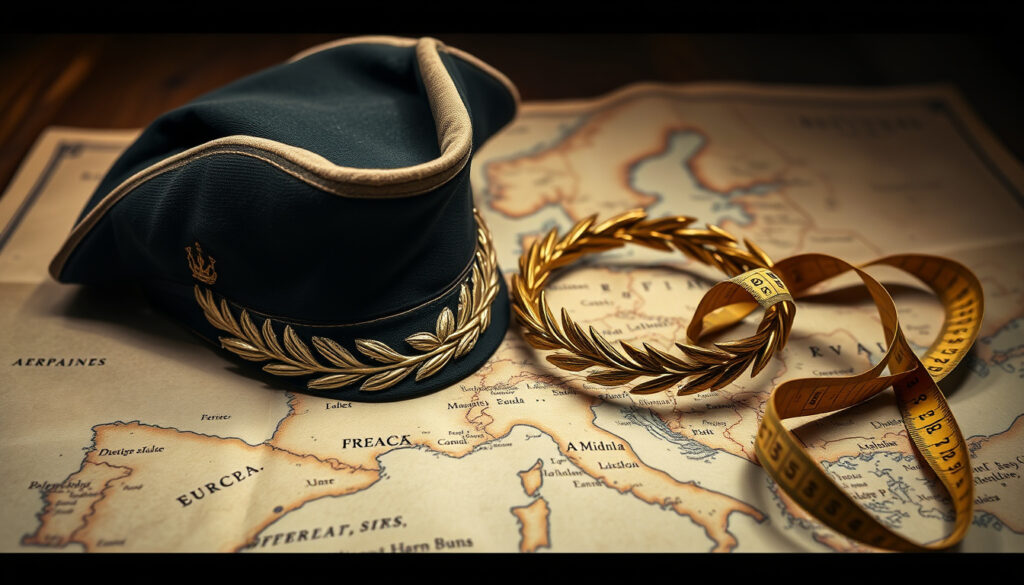
- Napoleon’s height (5’2″ in French inches = 5’7″ modern) is one of history’s most persistent myths, likely created by British propaganda.
- The Napoleonic Code remains the foundation of civil law in many countries today, including France, Italy, and parts of the United States.
- Napoleon’s hat (bicorne) is one of the most recognizable artifacts in history; original hats sell for millions at auction.
- Despite his military genius, Napoleon’s downfall was sealed by the disastrous invasion of Russia in 1812 and the Battle of Waterloo in 1815.
| Fact | Detail |
|---|---|
| Height | Approximately 5’7″ (1.70 m) in modern measurements |
| Spouse | Joséphine de Beauharnais (m. 1796–1810), Marie-Louise of Austria (m. 1810–1821) |
| Children | Napoleon II (King of Rome), plus several illegitimate children |
| Major Battles | Austerlitz (1805), Jena (1806), Borodino (1812), Waterloo (1815) |
| Exile | Elba (1814–1815), Saint Helena (1815–1821) |
| Cause of Death | Officially stomach cancer; theories include arsenic poisoning |
How Tall Was Napoleon Bonaparte? Separating Myth from Fact
The idea that Napoleon was unusually short is one of the most persistent myths in history. According to Wikipedia and other sources, the confusion arises from a difference between French inches and modern inches. The measurement of 5 feet 2 inches in the French system equates to about 5 feet 7 inches (1.70 m) today, which was average for the time.
What is the correct pronunciation of Napoleon Bonaparte?
In French, the name is pronounced /napɔleɔ̃ bɔnapaʁt/ (nah-poh-lay-ohn boh-nah-part). The English pronunciation is commonly /nəˈpoʊliən ˈboʊnəpɑːrt/. Both are widely accepted.
What happened to Napoleon Bonaparte’s hat?
The bicorne hat became a visual trademark. Original hats survive in museums and private collections, and some have sold for more than $2 million at auction.
Did Napoleon really have a small hand?
Some accounts claim he hid a small or deformed hand, but no reliable historical evidence supports this. It is likely another embellishment from British wartime propaganda.
While the myth is widely debunked, no precise citation for Napoleon’s measured height appears in the sources used for this article. The 5’7″ figure is drawn from historical conversion tables, not from a direct autopsy record.
What Are the Best Books and Movies About Napoleon Bonaparte?
Best Books About Napoleon
The Five Books interview with historian Andrew Roberts recommends several authoritative works. Roberts highlights Napoleon as a modernizer who reshaped administration and finance. The list includes biographies by Roberts himself, as well as studies by other scholars, but the full set of titles is not provided in the excerpt.
Famous Napoleon Quotes
“Impossible is a word to be found only in the dictionary of fools.”
Attributed to Napoleon, exact origin debated
“A leader is a dealer in hope.”
Attributed, from his writings
“History is the version of past events that people have decided to agree upon.”
Attributed to Napoleon, popularized later
Authentic Photos of Napoleon
Photography was invented after Napoleon’s death; the first photograph was taken around 1826–1827. No photographs of Napoleon exist. Only paintings, drawings, and engravings capture his likeness.
Who Were Napoleon Bonaparte’s Family and Successors?
Wife: Joséphine de Beauharnais
Napoleon married Joséphine in 1796. According to OSU eHistory and Napoleon.org, she was crowned Empress in 1804. The couple divorced in 1810 because she could not produce an heir, a dynastic concern rather than a personal failing.
Napoleon II and the Succession
Napoleon’s son, Napoleon II (King of Rome), was born in 1811 but never ruled. After Napoleon’s fall, the title passed to his nephew, who became Napoleon III.
Napoleon III and Louis-Napoleon
Napoleon III, also known as Louis-Napoleon, was the son of Napoleon’s younger brother Louis Bonaparte. He served as President of France from 1848 to 1852 and then as Emperor until 1870.
Napoleon’s parents were Carlo Bonaparte and Letizia Ramolino. His siblings included Joseph, Lucien, Louis, and Pauline, among others. The Bonaparte dynasty continued to influence French politics for decades.
Napoleon Bonaparte Timeline: Key Events
- – Born in Ajaccio, Corsica. (Britannica)
- – Graduates from military academy; becomes artillery officer.
- – Marries Joséphine de Beauharnais; begins Italian campaign.
- – Coup of 18 Brumaire; becomes First Consul.
- – Crowned Emperor of the French.
- – Victory at Austerlitz.
- – Disastrous invasion of Russia.
- – First abdication; exiled to Elba.
- – Return (Hundred Days); defeated at Waterloo; exiled to Saint Helena.
- – Dies on Saint Helena. (OSU eHistory)
- – Remains returned to France; interred at Les Invalides.
What We Know vs. What Remains Uncertain
| Established Information | Information That Remains Unclear |
|---|---|
| Napoleon was born in Corsica in 1769. | Exact cause of death – stomach cancer vs. arsenic poisoning theories. |
| He was Emperor of the French from 1804 to 1814 and briefly in 1815. | His precise height due to differing measurement systems. |
| He died on Saint Helena in 1821. | The full extent of his relationship with Joséphine. |
| The Napoleonic Code was established under his rule. | Some details of his escape from Elba. |
Napoleon Bonaparte: Historical Analysis and Context
Napoleon played a critical role in spreading revolutionary ideals across Europe, dismantling feudal structures and introducing the concept of legal equality. His military innovations, such as the corps system and the aggressive use of artillery, became standard in modern warfare.
At the same time, his legacy is deeply controversial. He restored hereditary monarchy, censored the press, and waged wars that caused immense suffering. Historians debate whether he was a reformer who advanced liberal ideas or a tyrant who exploited them for personal power. Comparisons with Alexander the Great, Julius Caesar, and even Hitler are common, but each falls short given Napoleon’s unique mix of administrative genius and imperial ambition.
Famous Napoleon Bonaparte Quotes and Their Sources
“There are only two forces that unite men – fear and interest.”
Attributed, from his political writings
Many of Napoleon’s sayings were recorded by witnesses or published in posthumous collections. Exact origins are often debated, but they continue to be quoted in discussions of leadership and power.
Napoleon Bonaparte in Modern Culture
Napoleon remains a fixture in popular culture. The 2023 Ridley Scott film Napoleon starring Joaquin Phoenix brought renewed attention to his story, though the provided research notes do not include a source evaluating its historical accuracy. Ongoing exhibitions at the Musée de l’Armée in Paris and new biographies published each year keep his legacy alive.
For further reading, you might also explore the Valley of the King – Complete 2025 Visitor Guide, which connects to Napoleon’s Egyptian campaign and the discovery of the Rosetta Stone. And if you are interested in the language of his empire, the English to French Translation – Best Tools and Guides offers practical resources.
Frequently Asked Questions About Napoleon Bonaparte
What is the correct pronunciation of Napoleon Bonaparte?
The French pronunciation is /napɔleɔ̃ bɔnapaʁt/ (nah-poh-lay-ohn boh-nah-part). In English, it is commonly pronounced /nəˈpoʊliən ˈboʊnəpɑːrt/.
What happened to Napoleon Bonaparte’s hat?
Napoleon’s iconic bicorne hat became a symbol of his image. Several original hats survive in museums and private collections, with some selling for over $2 million at auction.
Where can I find authentic photos of Napoleon Bonaparte?
Photography was invented after Napoleon’s death (the first photograph was taken in 1826 or 1827). There are no photographs of Napoleon; only paintings, drawings, and engravings exist.
Who was Napoleon Bonaparte III?
Napoleon III (Charles-Louis Napoléon Bonaparte) was the nephew of Napoleon I. He served as President of France from 1848 to 1852 and as Emperor of the French from 1852 to 1870.
What is the relationship between Napoleon Bonaparte and Louis-Napoleon?
Louis-Napoleon (Napoleon III) was the son of Louis Bonaparte, Napoleon I’s younger brother. He was Napoleon I’s nephew.
More related posts
 Kate Robbins – Biography, Family, TV Shows and Career Facts
 Pat McFadden – Biography, Political Career and Personal Life
 Steve Witkoff – Biography, Net Worth, and Diplomatic Role
 One Direction Harry Styles – Age, Net Worth and 2026 Updates
 Nashville vs Inter Miami – Who Won and Final Score
 When Does Ramadan Start 2026 – UK Dates, Timetable and Key Facts
 Jasveen Sangha – Sentenced to 15 Years for Matthew Perry’s Death
 Queen Camilla – Biography, Age, News and Young Photos
